


How to Safely Dispose of Old White Goods and Appliances
Old fridges, washing machines and cookers can't go in general rubbish because they contain hazardous components covered by WEEE regulations. The safest options are a licensed waste carrier, your local household recycling centre, council bulky waste collection, or manufacturer take-back when buying new. Always check for a valid waste carrier licence before handing anything over.
That washing machine in the garage has been "about to go" for six months now, hasn't it? Or maybe it's the old fridge-freezer that's been unplugged in the hallway since you upgraded, quietly taking up space while you work out what to do with it.
We get it. White goods are heavy, awkward, and most of us have no idea where they're actually supposed to go once they stop working. Unlike a bag of general rubbish, you can't just pop them in the bin and forget about them.
This guide walks through exactly how to safely dispose of old white goods and appliances, including your legal options, the safety steps worth taking, and the mistakes we see people make far too often. By the end, you'll know exactly what to do with that fridge-freezer that's been living in limbo.
What counts as white goods, and why they're treated differently
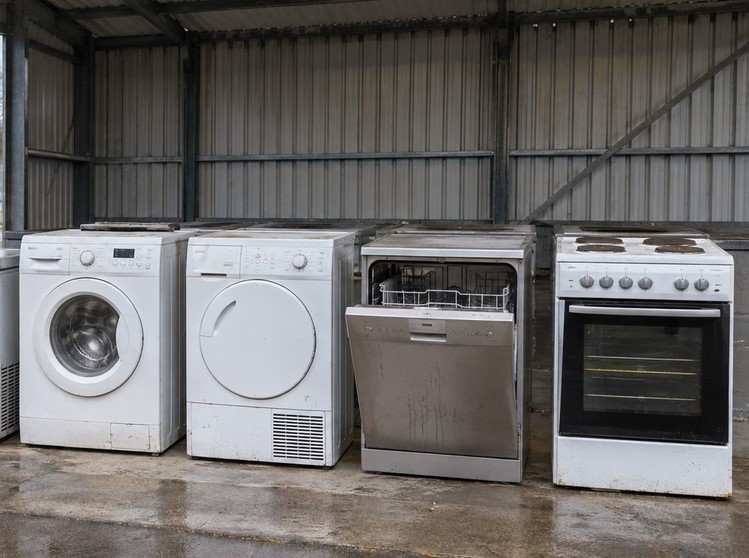
White goods covers the big household appliances: fridges, freezers, washing machines, tumble dryers, dishwashers, cookers and ovens. They're large, often electrical, and many contain materials that need special handling.
Fridges and freezers, for example, contain refrigerant gases and insulation foam that can harm the environment if they're not removed properly. That's why they fall under the UK's WEEE (Waste Electrical and Electronic Equipment) regulations, which exist specifically to keep electrical waste out of general landfill and ensure it's treated correctly.
Why safe disposal actually matters
It's tempting to view appliance disposal as a logistics problem rather than anything more serious. But getting it wrong carries real consequences.
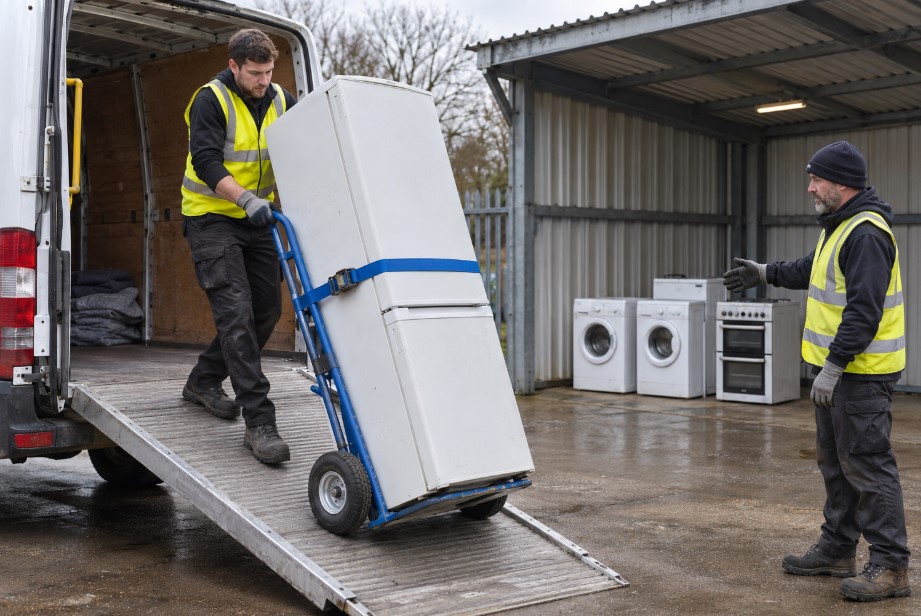
Environmental harm comes from refrigerants and insulation foam escaping into the atmosphere if a fridge isn't processed correctly. Safety risks include sharp edges, heavy lifting injuries, and exposed electrics on damaged units. And then there's the legal side.
Fly-tipping enforcement has become considerably tougher. In 2026, the government raised the maximum fixed penalty for fly-tipping in England from £1,000 to £5,000, a 400% increase. During 2024/25, local authorities dealt with 1.26 million fly-tipping incidents, and household waste was involved in 777,000 of them. Crucially, if your old fridge ends up dumped in a layby, that can be traced back to you. Householders have a legal duty of care to make sure waste only goes to an authorised person, so handing your appliance to a "man with a van" who can't say where it's going could land you with a fine for someone else's dodgy disposal job.
Your best options for disposing of white goods
Use a licensed removal team
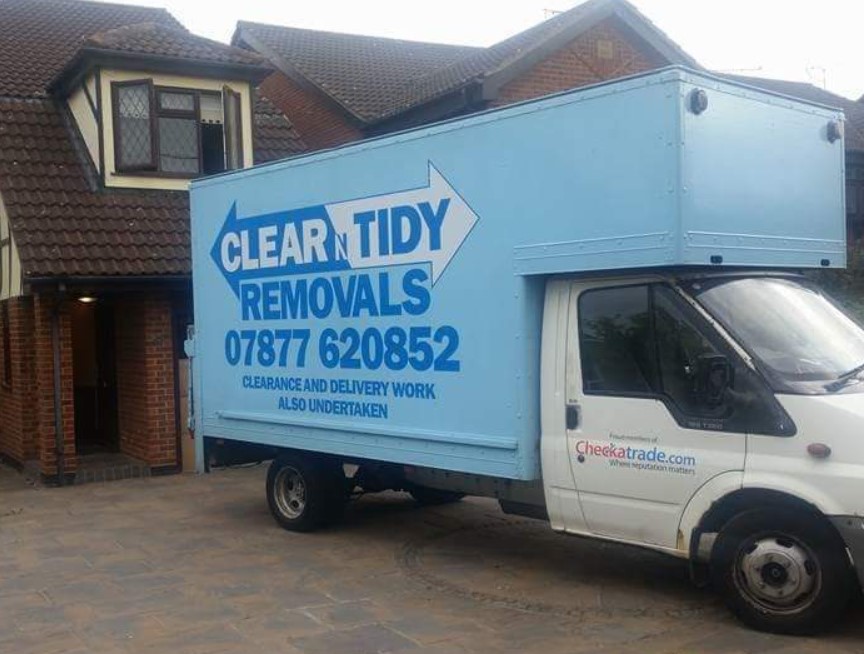
If you've got a heavy appliance, narrow stairs, or simply no suitable vehicle, a licensed removal company is the easiest route. We're a local Southend team offering white goods removal across Essex, and we hold a waste carrier licence along with public liability and goods-in-transit insurance. That means your old fridge, cooker, or washing machine gets collected and disposed of properly, without you needing to lift a finger (or your back).
Take it to a household waste recycling centre
Most council recycling centres accept white goods for free, though some ask you to book a slot in advance and may limit the number of items per visit. Check your local council's website before loading up the car, and make sure you've got suitable transport. Appliances are awkward to load alone, so bring a second pair of hands.
Book a council bulky waste collection
Many councils offer a bulky item collection service, usually for a small fee. It's convenient because it's collected straight from your home, but waiting times can run to a couple of weeks, and most councils cap how many items they'll take per booking.
Let the retailer take it away
Buying a replacement appliance? Most major retailers will remove your old one when they deliver the new one, often for free or a small charge. Confirm this when you order, and ask exactly what they'll take, since some will only remove like-for-like items.
Donate or sell it, if it's genuinely usable
If the appliance still works and is in decent condition, charities and reuse schemes may take it. Be upfront about its condition and age, and note that many charities require appliances to pass a PAT (portable appliance test) before they'll accept them.
Special rules for fridge removal and freezers
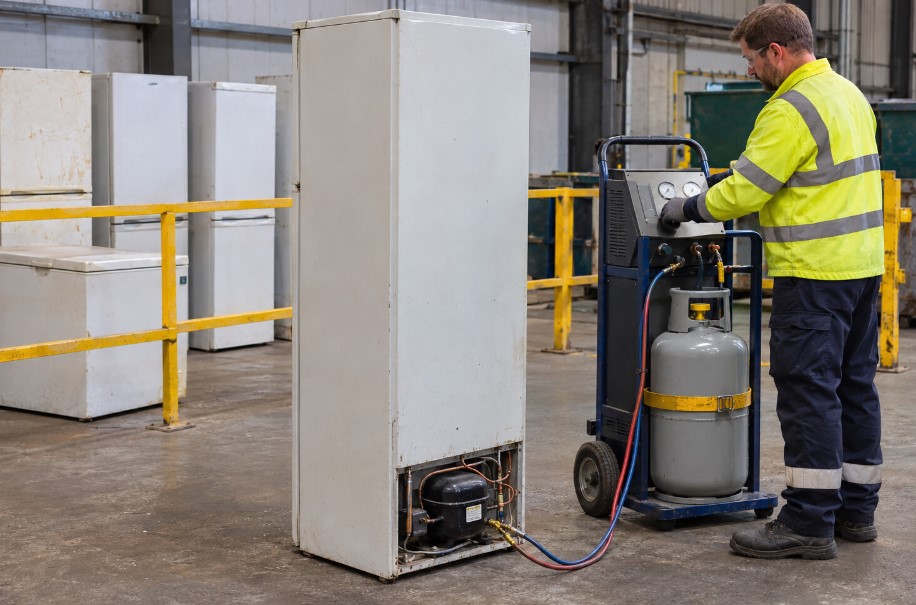
Fridge removal deserves its own mention because fridges and freezers are treated as hazardous electrical waste under WEEE regulations. They contain refrigerant gases, compressor oils and foam insulation that must be removed by a properly licensed handler.
Before collection, defrost the appliance fully to avoid water damage, and keep the door closed or secured with tape, particularly if children or pets are around. Measure doorways and stairwells too. Southend has plenty of flats with narrow stairwells and tight parking, and nothing slows a job down faster than discovering the fridge doesn't fit through the door.
Prepping your appliance for collection: a quick checklist
Unplug the appliance and leave it to stand for a few hours if it's a fridge or freezer
Fully defrost fridges and freezers to prevent leaks
Drain hoses on washing machines and dishwashers
Secure loose cables, hoses and shelves
Clear a path from the appliance to the door or driveway
Check stairwell width and parking access, especially in flats
Common mistakes worth avoiding
We've seen it all. People leaving water in machines, which then leaks everywhere mid-lift. Appliances left on the curb overnight "just to save time," which is actually fly-tipping if nobody collects it promptly. And far too often, people handing their old appliance to whoever offers the cheapest price on Facebook, without asking a single question about where it's actually going.
A quick check is simple: ask for a waste carrier registration number and look it up on the Environment Agency's public register. It takes two minutes and could save you a hefty fine.
When it makes sense to bundle it with a bigger clearance
If you're moving home, renovating, clearing a rental property, or sorting a relative's house, your old appliances are rarely the only thing that needs to go. We also handle rubbish removals and full house clearances across Southend, Leigh-on-Sea, Westcliff, Rayleigh, Basildon, Chelmsford and the wider Essex and Kent area, so it's often easier to sort everything in one visit rather than tackling the fridge separately from everything else.
Frequently asked questions
Can I put white goods in my general rubbish or skip?
No. White goods fall under WEEE regulations because of their electrical components and, in the case of fridges and freezers, refrigerant gases. They need to go through a licensed waste carrier, recycling centre, or approved collection scheme.
Do I need to defrost a fridge or freezer before collection?
Yes. Defrosting prevents water leaking during transport and makes the appliance easier and safer to handle.
How do I know if someone is a licensed waste carrier?
Ask for their registration number and check it against the Environment Agency's public register of waste carriers, brokers and dealers. In England, a legitimate upper-tier registration starts with "CBDU."
Do you collect appliances from upstairs flats?
Yes, we can collect from inside the property, including upstairs rooms, as long as access is safe and clear.
Can you take multiple appliances in one visit?
Absolutely. Whether it's a washing machine, cooker and fridge-freezer all going at once, or a full house clearance, we can handle it in a single job.
What if the appliance is built-in or hardwired?
Let us know in advance so we can plan the right approach, particularly for anything hardwired that needs disconnecting safely beforehand.
Do you cover areas outside Southend?
Yes, we regularly work across Southend-on-Sea, Leigh-on-Sea, Westcliff, Shoeburyness, Rayleigh, Rochford, Basildon, Chelmsford, and the wider Essex and Kent area.
How quickly can you collect an old appliance?
We aim to be as fast and flexible as possible. Availability depends on the size of the job and our diary, but get in touch and we'll always try to find a slot that works.
Ready to get that old appliance out the door?
Dealing with bulky white goods doesn't need to mean a weekend spent wrestling a fridge down the stairs. Get in touch with Clear "N" Tidy Removals and we'll give you straightforward advice, collect your old appliances properly, and make sure they're disposed of the right way, no fly-tipping risk, no guesswork.
